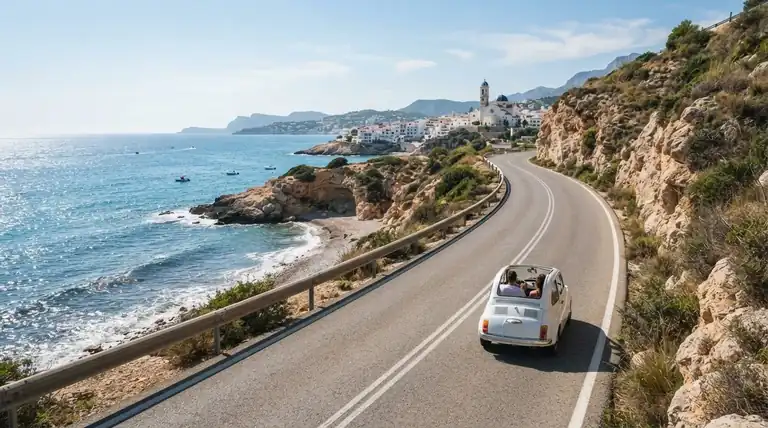
Driving in Altea & the Costa Blanca
Speed limits run 120 km/h on motorways down to 20 in shared streets, and from January 2026 Spanish-registered cars must carry a connected V-16 beacon.
Compare Car Rental DealsSearch & Compare Car Rental Deals
Free cancellation on most vehicles
Spanish Rules of the Road
Spain drives on the right, and overtaking happens on the left. Speed limits step down as roads get busier: 120 km/h on motorways, 90 on conventional roads, 50 in urban areas, dropping further to 30 on single-lane urban streets and 20 on shared pedestrian streets. On conventional roads, the limit typically falls to around 80 km/h in wet conditions, so it pays to ease off when rain hits the windscreen.
Drivers new to Spanish roundabouts sometimes hesitate at the entry point, but the rule is simple: give way to traffic already circulating, and exit only from the outer, right-hand lane. Missing an exit is not a crisis; just continue around for another pass. First-time visitors picking up a car nearby can review the Alicante Airport car rental guide for what to expect at the counter before joining traffic.
- Blood-alcohol limit: 0.5 g/L in blood (0.25 mg/L in breath); 0.3 for novice and professional drivers
- Guardia Civil checkpoints are frequent, so it is safest to treat the limit as effectively zero
- Handheld phone use is illegal; hands-free only, and a phone mount must not block your view
- Seatbelts are mandatory for every occupant, front and rear
- Children 135 cm tall or under need an approved child seat, fitted in the rear
From 1 January 2026, Spanish-registered cars must carry a connected V-16 emergency beacon instead of the old warning triangles. It reports your location to the DGT automatically if you break down or stop on the hard shoulder. Ask at pickup whether the beacon is in the glovebox before you drive off.
Non-resident drivers can be asked to pay a traffic fine on the spot, and a discount of roughly 50% typically applies if it is settled within about 20 days. Keeping documents and payment methods handy avoids extra hassle if you are stopped.
The Roads Around Altea
Altea sits on the AP-7/A-7 coastal corridor, which has been toll-free since the AUMAR concession expired on 1 January 2020. It is a dual carriageway rated for 120 km/h and remains the fastest way to reach almost anywhere on the Costa Blanca. The Altea car rental guide has more on how this road fits into a typical stay.
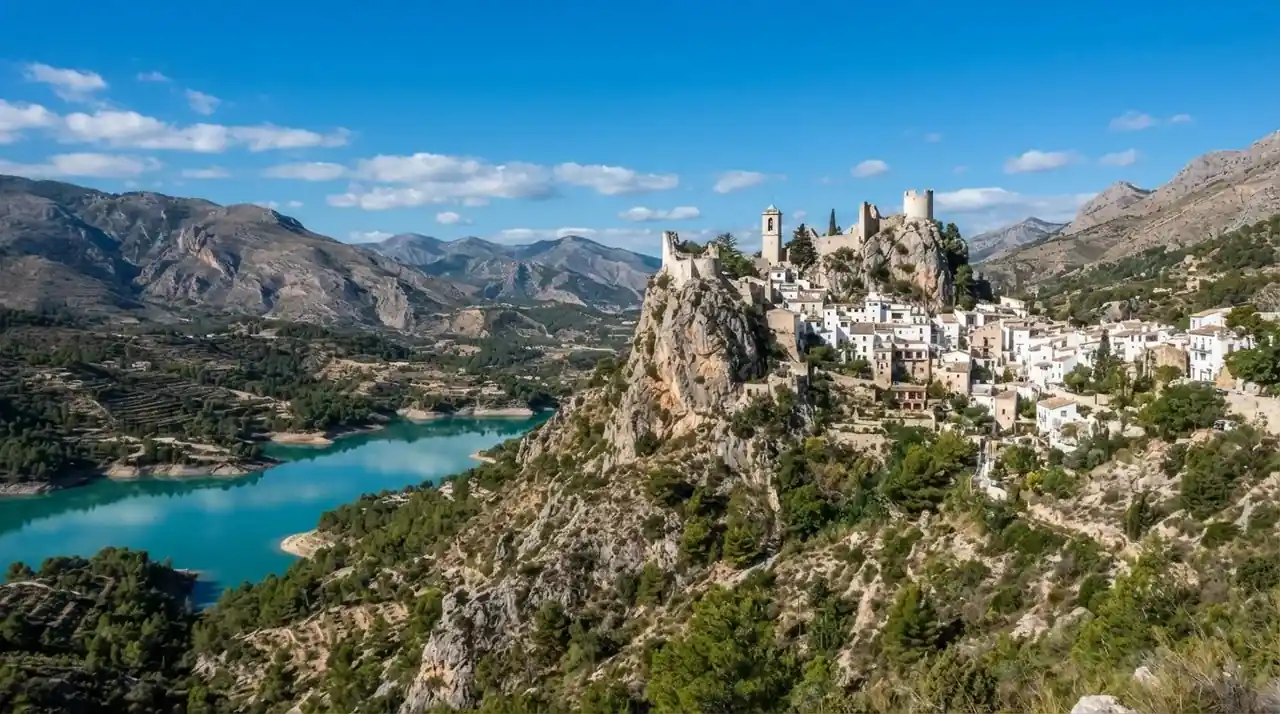
The N-332 runs along the seafront through Altea itself and stays busy through summer, particularly where it threads through central Benidorm. Inland, the CV-70 and CV-755 climb toward Guadalest and the Algar Waterfalls on paved but narrow roads with hairpin bends; no 4WD is needed, but a relaxed pace matters more than horsepower up there.
| Destination | Distance from Altea | Drive time |
|---|---|---|
| Alicante-Elche Airport (ALC) | 60-66 km | 45-55 min |
| Benidorm | 11 km | 15-20 min |
| Calpe | 12 km | 18-22 min |
| Guadalest | 22-25 km | 30-40 min |
| Algar Waterfalls | 15 km | 20-30 min |
| Javea | 40 km | 38-45 min |
| Alicante city | 55 km | 45 min |
| Valencia | 130 km | about 1h30 |
On any of these routes, keep an eye out for cyclists on the shoulder of coastal and inland roads alike; Spanish law expects a gap of about 1.5 m when overtaking them. Slow-moving tour buses, strong sun glare on the AP-7 in late afternoon, and the occasional animal crossing an unlit rural road at night are the other common surprises. Anyone planning a fuller inland loop can check day trips from Altea for a route that ties several of these stops together.
Fuel and Refuelling
Fuel on the Costa Blanca is priced at mainland Spanish rates, including VAT. Unleaded typically runs about EUR 1.45-1.55 per litre and diesel around EUR 1.50-1.60, though prices move with global markets. Low-cost chains such as Plenergy, Petroprix and BonArea are usually around 10-15 cents cheaper per litre than the big-name brands, and it is worth routing past one if there is time.
- Stations are dense along the coast, including in and around Altea, Benidorm and Calpe
- Inland roads toward Guadalest and the Algar Waterfalls have far fewer stations, so refuel before heading up
- Many 24/7 unmanned pumps exist for after-hours fills, but they are typically card-only
- Confirm the rental car's fuel policy at pickup so you know whether to return it full
If a rental agreement is full-to-empty rather than full-to-full, filling up right before drop-off wastes money, since any leftover fuel is rarely refunded. Comparing that detail across a few operators before booking is one of the simpler ways to trim costs; see Compare rental cars for current options.
Parking in Altea and at the Sights
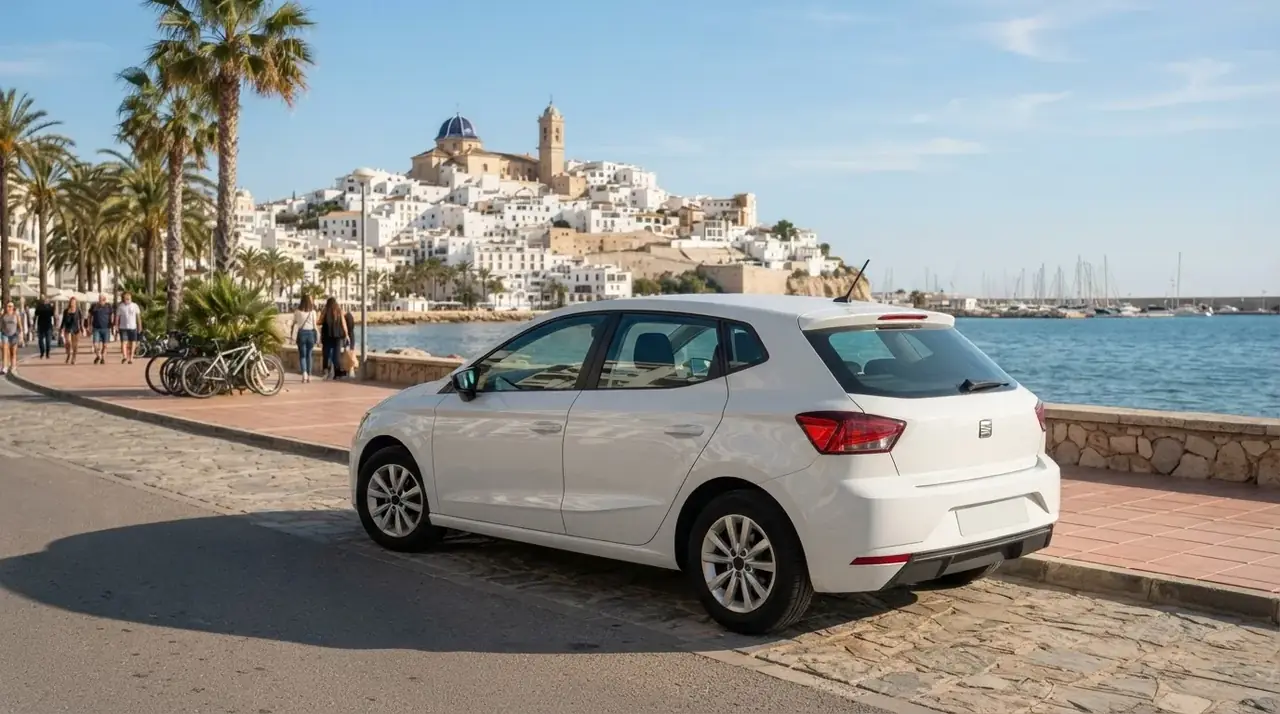
Altea's old town climbs a steep hill of narrow, largely pedestrian lanes, and driving into it is not something most visitors attempt more than once. The practical approach is to park below near the seafront or town edge and walk up; the incline is short but genuinely steep in places.
| Parking option | Type | Notes |
|---|---|---|
| Basseta / Cami de l'Algar | Free | About 500 spaces; closed Tuesdays for the weekly market |
| Foietes | Free | Short walk from the old town |
| Near the TRAM station | Free | Convenient if combining car and tram travel |
| Plaza del Ayuntamiento | Paid, underground | Roughly EUR 12-16 per day |
| Plaza de la Pau | Paid, underground | Central, walkable to the old town |
| CEAM | Paid, underground | Alternative central option |
On-street spaces follow a colour system worth learning before the first parking search: blue lines mean paid short-stay parking, payable at a meter or app; green is reserved for residents; yellow means no parking; and white marks free spaces. Checking the cheap car rental Altea page can help balance the cost of a paid rental against what a paid parking spot adds to a daily budget.
Parking for day trips
- Guadalest village lots run about EUR 2 per day; arrive before 11:00 in high season, as they fill quickly
- Algar Waterfalls parking is paid, typically EUR 3-5
- The Penon de Ifach in Calpe requires a free permit booked online in advance before you can park and hike
Seasonal Driving and Safety
The Costa Blanca has a mild climate for most of the year, which makes driving conditions generally forgiving. Summer brings its own pressure: July and August combine strong heat with heavier coastal traffic, especially around Benidorm and Altea's seafront roads, so building in extra time for short hops is sensible.
Autumn is the season that catches visitors off guard. Between roughly September and November, the region can see sudden, intense rain events locally known as gota fria or DANA, capable of producing flash floods with little warning.
Never drive across a flooded road or a dry riverbed (rambla) that has started running with water, even if it looks shallow. Check AEMET weather warnings before setting out during autumn storm season, and delay a trip rather than testing a flooded crossing.
Central Benidorm also operates a low-emission zone (ZBE) that requires a permit for non-resident vehicles, which is worth checking before driving through rather than around it. In the event of a minor collision, call 112 and complete the European Accident Statement (parte amistoso) with the other driver; never sign it if you disagree with how it describes what happened.
Frequently Asked Questions
Is the AP-7 a toll road now? ▾
What are the speed limits in Spain? ▾
Does my rental car need the V-16 beacon? ▾
Where do I park in Altea's old town? ▾
Is fuel expensive on the Costa Blanca? ▾
Do I need a 4x4 for Guadalest and the Algar Waterfalls? ▾
Ready to compare car rental deals in Altea?
Check live prices and availability from local and international suppliers.
Compare car rental deals